Stand under the electric sky on a Saturday night and it is easy to think Electric Daisy Carnival, known everywhere as EDC, was always this big. Nine stages. Fireworks that never seem to stop. A Ferris wheel turning over a small city built for one weekend. More than 500,000 people over three days in Las Vegas alone.
It was not always this big. Not even close.
The real story starts much smaller, in a field, with about 3,000 people, a ferris wheel, a tornado ride, and two young promoters who wanted to throw a carnival, not just a rave. And the man most people credit with creating EDC did not create the first one at all. He did something just as important. He took that name, that idea, and he leveled it up into a global festival.
Hauptfuhr and Richards created it in 1991. Rotella built the modern EDC.
A field in Chino, 1991
The first Electric Daisy Carnival was created in 1991 by Stephen Hauptfuhr, also known as Mr. Kool Aid, and Gary Richards, also known as Destructo.
Hauptfuhr had been throwing underground parties since 1986, after getting into acid house as an art student in London. Richards was a Southern California promoter and DJ who would later found HARD Events. Together they put on a party originally called Magical Mickey’s Electric Daisy Carnival, an outgrowth of their early 1990s Double Hit Mickey Rave.
That first EDC landed in a field in Chino, California, near dairy farms. Some later histories place it in Pomona, which is how the confusion between the two towns started, but Chino is the location given in the main festival histories and in interviews with Hauptfuhr himself.
About 3,000 to 3,500 people came. What made it different was the promise on the poster: this was an outdoor carnival, with rides, lights, music and decorations, inspired in part by Alice in Wonderland. DJs on the day included Mr. Kool Aid, Joey Beltram, Michael Cook, Jon Williams, Destructo and Eli Star.
That mix, a rave with a carnival heart, is still the DNA of EDC today. The stages got bigger. The rides never left.
The underground years, 1992 to 1995
EDC came back in 1992 near El Mirage Dry Lake in California’s Mojave Desert, and it continued in 1993 inside the early 1990s underground scene, a world of secret map points and warehouse style parties. In 1994 it was not organised at all. This was a moveable, fragile thing, not an institution.
Then came the handover that changed everything. In 1995, Hauptfuhr threw EDC again, and then licensed the Electric Daisy Carnival name to a young Los Angeles promoter named Pasquale Rotella, the chief executive of Insomniac Events. The deal was made with help from Philip Blaine, a partner of Richards at 1500 Records and the promoter behind Southern California’s first legitimate dance festival, Organic ’96. Between that licence and the first Insomniac EDC, Blaine and Rotella created Organic ’96 together.
It was a clean pass of the torch, even if most fans today never heard the first names on it.
The kid from the deli who leveled it up
Pasquale Rotella did not come from a wealthy family, and he did not start rich. He grew up in Glendale, California, a first generation American born to Italian immigrant parents, Vincent and Irene Rotella. The family owned a deli and restaurant in Venice Beach, where a young Pasquale swept floors and worked as a busboy, learning business at the family counter.
He got into dance music in 1991, started going to underground parties, and threw his first event in 1992, called Unity Groove. In October 1993, at 19, he started Insomniac because, in his own words, there was nothing going on for him and his friends. The first Insomniac party was in a warehouse in South Central Los Angeles, on Crenshaw.
His first large legal festival was Nocturnal Wonderland in February 1995. After two successful Nocturnal events, he asked Richards and Hauptfuhr for permission to use the Electric Daisy Carnival name for a new event. That permission, the 1995 licence, is the hinge the whole modern story turns on.
So when people ask who was responsible for leveling EDC up, the answer is Rotella, with Insomniac. Not because he invented it, but because he built the machine around it: the production, the characters, the dusk to dawn ritual, and the belief that a rave could be a world you walk into, not just a night you go to.
Insomniac takes the name, 1997 to 2010
The Insomniac version of EDC debuted on March 29, 1997, at the 5,000 capacity Shrine Expo Hall in Los Angeles. It sold out. Insomniac counts 1997 as its EDC start, even though the name itself dates to 1991, and that double birthdate explains a lot of the arguments online about how old EDC really is.
There was no EDC in 1998. It returned in 1999 at Lake Dolores Waterpark in Newberry Springs, then moved around California through the 2000s: Tulare in 2000, where 24,000 people showed up and noise complaints ended the venue deal, then Hansen Dam in 2001, when EDC expanded to multiple stages for the first time, with names like Merry Go Round, Fun House and Bassrush Arena. A first EDC Texas was also held that year in Austin.
From 2003 to 2006 EDC settled at the NOS Events Center in San Bernardino. In 2007 it stepped up to the Los Angeles Memorial Coliseum, drawing crowds that reached 154,000 by 2008 and 2009, when it became a two day event. Colorado and Puerto Rico editions followed. EDC was no longer a California secret. It was becoming a national draw, and it was outgrowing every room it played.
Then Los Angeles ended it. In 2010, EDC Los Angeles drew about 185,000 people over June 26 and 27. The weekend drew heavy criticism after people under the required age of 16 got in, more than 100 ravers were hospitalised after a crowd stampede, and 15 year old Sasha Rodriguez died after taking MDMA. The city suspended remaining and future events while new safety provisions were worked out, including on site doctors and an 18 and over rule.
It was the lowest point in the story, and, in hindsight, the turning point. EDC needed a new home, a bigger site, and a stricter way of running a city sized crowd. It found all three in the desert.
Las Vegas changes everything, 2011 onward
In 2011, EDC moved its flagship to Las Vegas Motor Speedway in Nevada. June 24 to 26, three days for the first time, reportedly 230,000 people. The Speedway gave EDC what Los Angeles no longer could: space, distance from neighbours, and a place where a festival that runs from dusk to dawn actually makes sense.
The growth after the move is hard to overstate. Las Vegas drew 320,000 in 2012, even with a night cut short by high winds, when fans were directed to the bleachers and Markus Schulz and Steve Aoki played impromptu sets on an art car. It drew 345,000 in 2013, the year Insomniac entered its partnership with Live Nation. In 2014 all 345,000 tickets sold out early, the build set a record for the largest structural stage in North America at the time, and the documentary Under the Electric Sky, filmed at EDC Las Vegas 2013, premiered at Sundance.
By the middle of the decade EDC Las Vegas was passing 400,000 people across a weekend. What had started as a field party was now one of the largest music festivals in North America, and everyone in dance music had to plan around it.
A world of Electric Daisy Carnivals
Las Vegas was the flagship, but it was never the whole map again. EDC Orlando debuted in that same move year, 2011, on May 27 and 28 at Tinker Field, next to the Florida Citrus Bowl, with about 12,000 people on Friday and 20,000 on Saturday. New York followed in 2012. London and Chicago arrived in 2013. Mexico City joined in 2014, then Brasil, India, Japan, China, Korea, Thailand, Portugal, Colombia and more. Some editions lasted, some did not. The point held: EDC had become a circuit, not a single weekend.
Orlando, quietly, became the second home that stuck. It returned to Tinker Field year after year, expanded to three days in 2019 with 225,000 people, survived the Covid break, and hit 300,000 in 2023. For Florida ravers, and for the Florida scene that lives here all year, EDC Orlando is not a satellite. It is the home date.
The Covid years tested the whole circuit. EDC Las Vegas was postponed and then cancelled in 2020. It came back in October 2021 with 500,000 people, marking 25 years since the festival’s early editions and 10 years since the move to Las Vegas. After that, the records resumed: 498,000 in Las Vegas in 2022, a record 525,000 in 2023, and 525,000 again in 2024.
What EDC is today, and where it goes next
Today the flagship is EDC Las Vegas at Las Vegas Motor Speedway, held in May, running dusk to dawn, with over 500,000 people over three days in recent years. The Las Vegas edition has nine stages for different genres, the largest of them, Kinetic Field, able to hold 70,000 people for headliners. Around the music sit 18 carnival rides, four Ferris wheels, art, performers and more than 5,000 staff working the weekend.
The giving is part of the modern operation, too. Through Insomniac Cares, launched in 2011, a percentage of ticket sales from flagship festivals goes to charity. More than $2 million had been donated by the early 2020s, to groups including Rock the Vote, Families for Effective Autism Treatment, the Injured Police Officers Fund, the Boys and Girls Club of Southern Nevada and the Nevada Childhood Cancer Foundation. DJ Magazine’s Top 100 Festivals list has ranked EDC near the very top in recent years, second in 2024.
In 2026, EDC Las Vegas marked the festival’s 30th anniversary in May, with 500,000 people over three days. EDC Orlando followed this fall, November 6 to 8, 2026, at Tinker Field. And the next chapter is already announced. After the 2026 Las Vegas edition, Insomniac said EDC Las Vegas will expand to two weekends in 2027, May 14 to 16 and May 21 to 23, branded Dusk and Dawn, with identical lineups, reduced capacity and lower ticket prices aimed at easing congestion and improving transport, plus curated side events across Las Vegas from May 13 to 24, billed as the Dusk Till Dawn Experience.
Two weekends. Same lineup. A festival so big it now needs to split itself in two to stay comfortable. That is a long way from a field in Chino.
The story in one timeline
Read this table top to bottom and you can see the whole handover, the crisis, and the explosion in one pass.
| Year | What happened |
|---|---|
| 1991 | First EDC in Chino, California. Created by Stephen Hauptfuhr and Gary Richards. About 3,000 to 3,500 people. |
| 1995 | Hauptfuhr licences the EDC name to Pasquale Rotella of Insomniac Events. |
| 1997 | First Insomniac EDC, March 29 at Shrine Expo Hall, Los Angeles. Sold out, 5,000 capacity. |
| 2001 | First multi stage EDC at Hansen Dam, plus a first Texas edition in Austin. |
| 2007 to 2009 | EDC at the LA Coliseum. Becomes a two day event, about 154,000 people. |
| 2010 | Final Los Angeles edition, about 185,000. City suspends future events after serious safety failures. |
| 2011 | Flagship moves to Las Vegas Motor Speedway, three days, 230,000. EDC Orlando debuts at Tinker Field. |
| 2013 | Insomniac partners with Live Nation. Las Vegas draws 345,000. |
| 2019 | EDC Orlando expands to three days, 225,000. Las Vegas hits a record 465,000. |
| 2021 | EDC returns after Covid, 500,000 in Las Vegas in October. |
| 2023 | Las Vegas record 525,000. EDC Orlando hits 300,000. EDSea cruise launches. |
| 2026 | EDC Las Vegas 30th anniversary edition in May. EDC Orlando, November 6 to 8 at Tinker Field. |
| 2027 | EDC Las Vegas expands to two weekends, Dusk and Dawn, May 14 to 16 and May 21 to 23. |
Boots on the ground in Orlando
That history is why being there in person still matters.
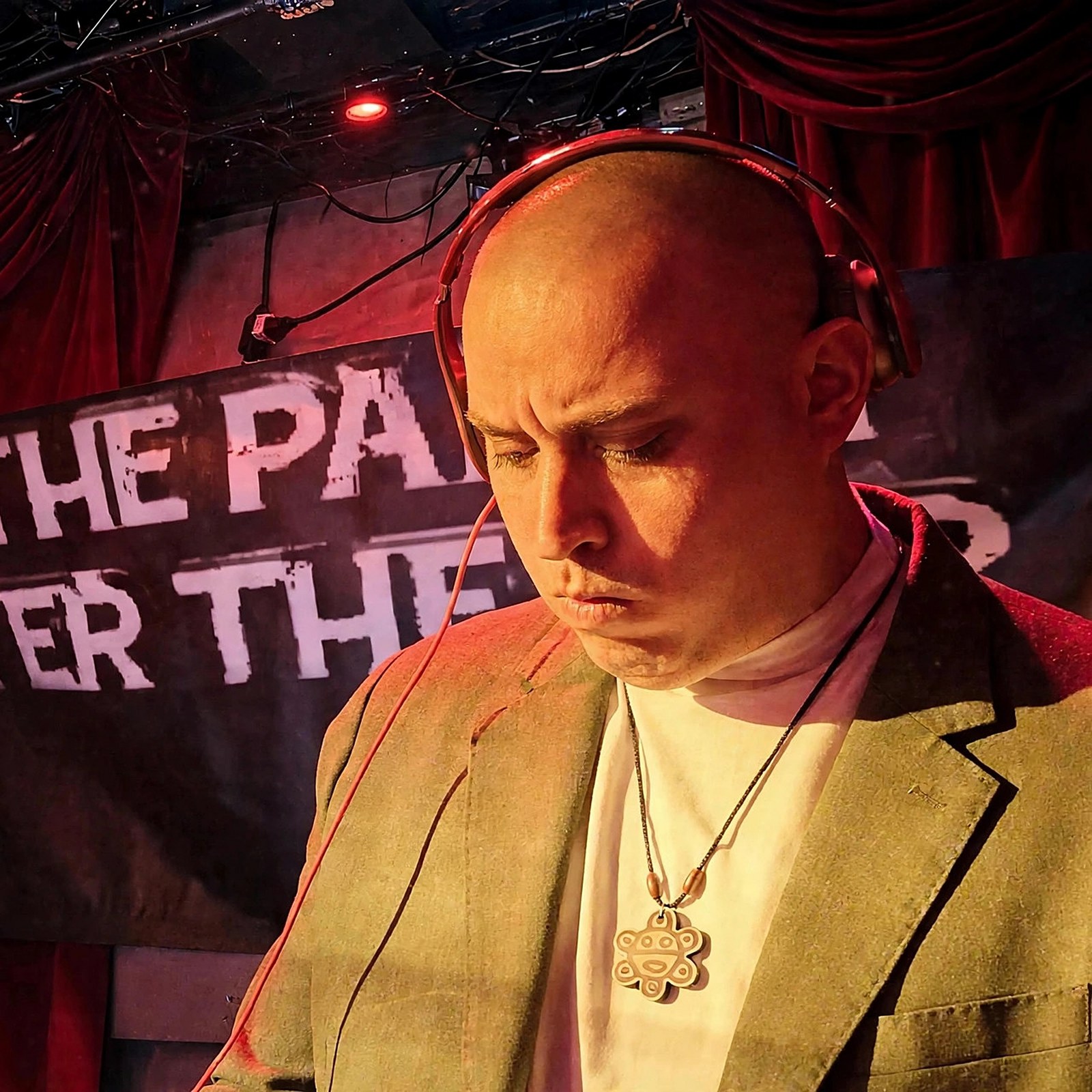
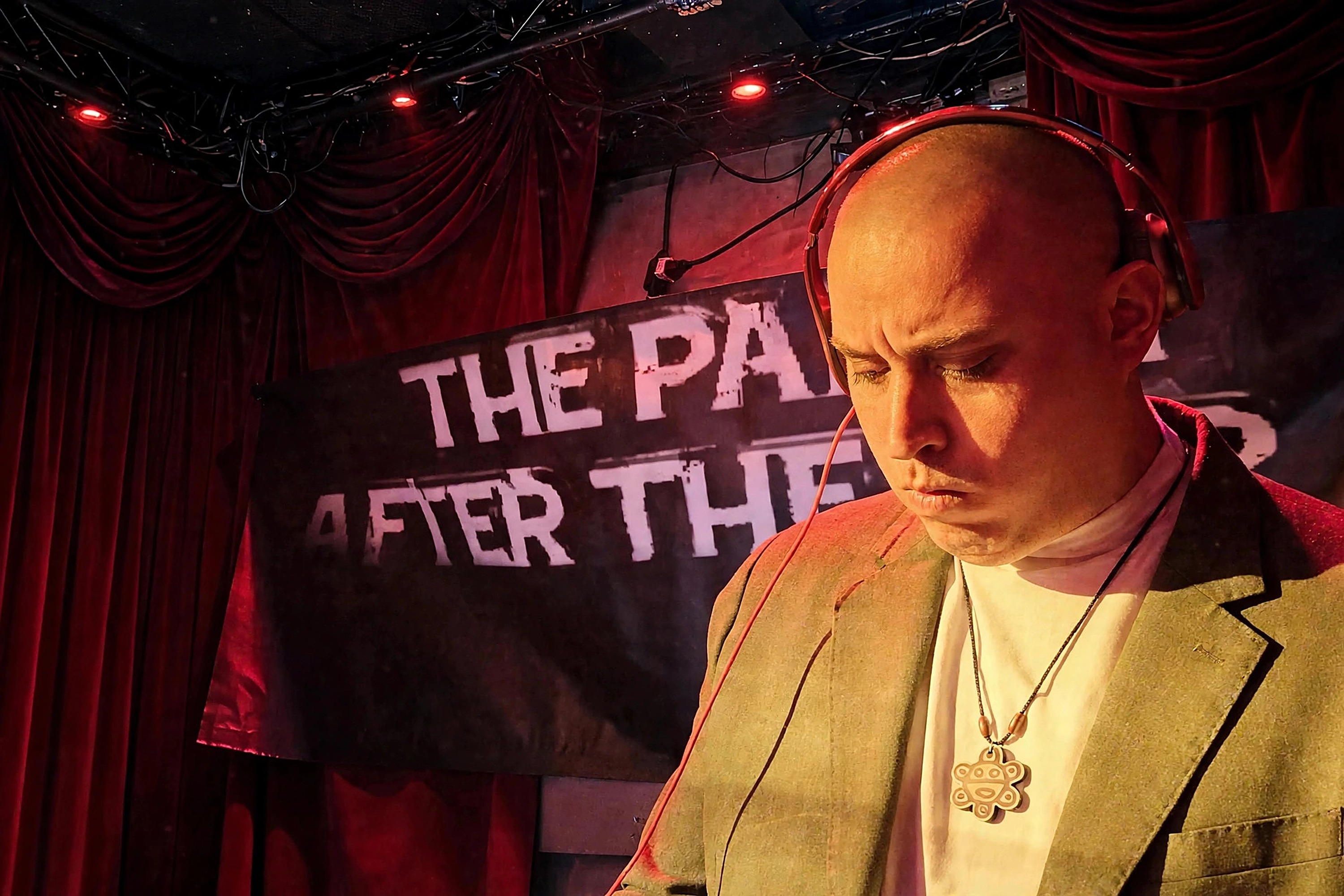
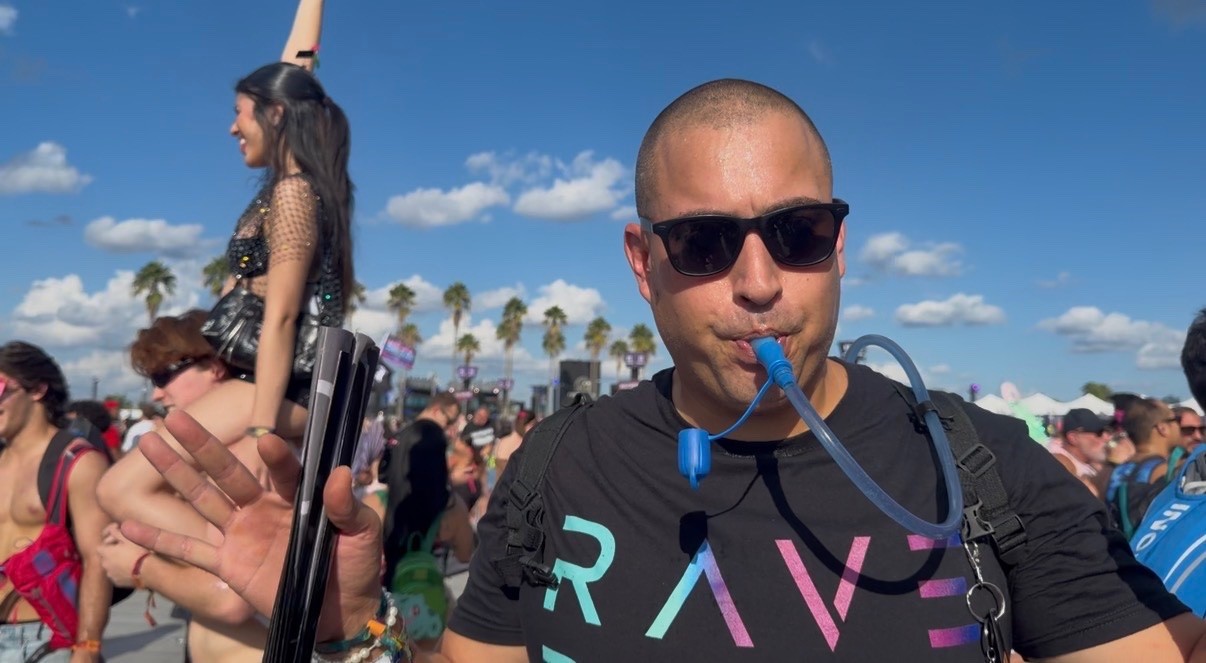
Urban House Music was on the ground at EDC Orlando on Friday, November 6, 2026, day one of the festival, covering it from inside. To be clear about what that means: Urban House Music was not there as official EDC media, and this article does not claim official media status. We were there the way the scene has always learned anything worth knowing, boots on the ground, in the crowd, at the stages, talking to people between sets.
From inside, EDC stops being a headline number and becomes a network. You hear which stages are pulling the real heads. You meet the DJs, promoters, crews and fans who keep Florida moving the other 51 weeks of the year. You recruit, you connect, you listen first. That is the work Urban House Music did in Orlando on Friday, day one only, and it is work you cannot do from a press release.
And yes, we captured it. A lot of it. Crazy rave footage from Friday only, the lights, the stages, the crowd at full tilt, shot from the floor where the energy actually lives. That footage is the other half of this story, and it will roll out with the Urban House Music coverage that follows this article.
That is the honest position, and it is a strong one. EDC built a world big enough that half a million people travel to stand inside it. Urban House Music stood inside the Orlando edition on Friday, day one only, and learned it from the ground. History tells you how EDC got here. Being there tells you where Florida fits in what comes next.
On the ground, inside it, with the footage to prove it.
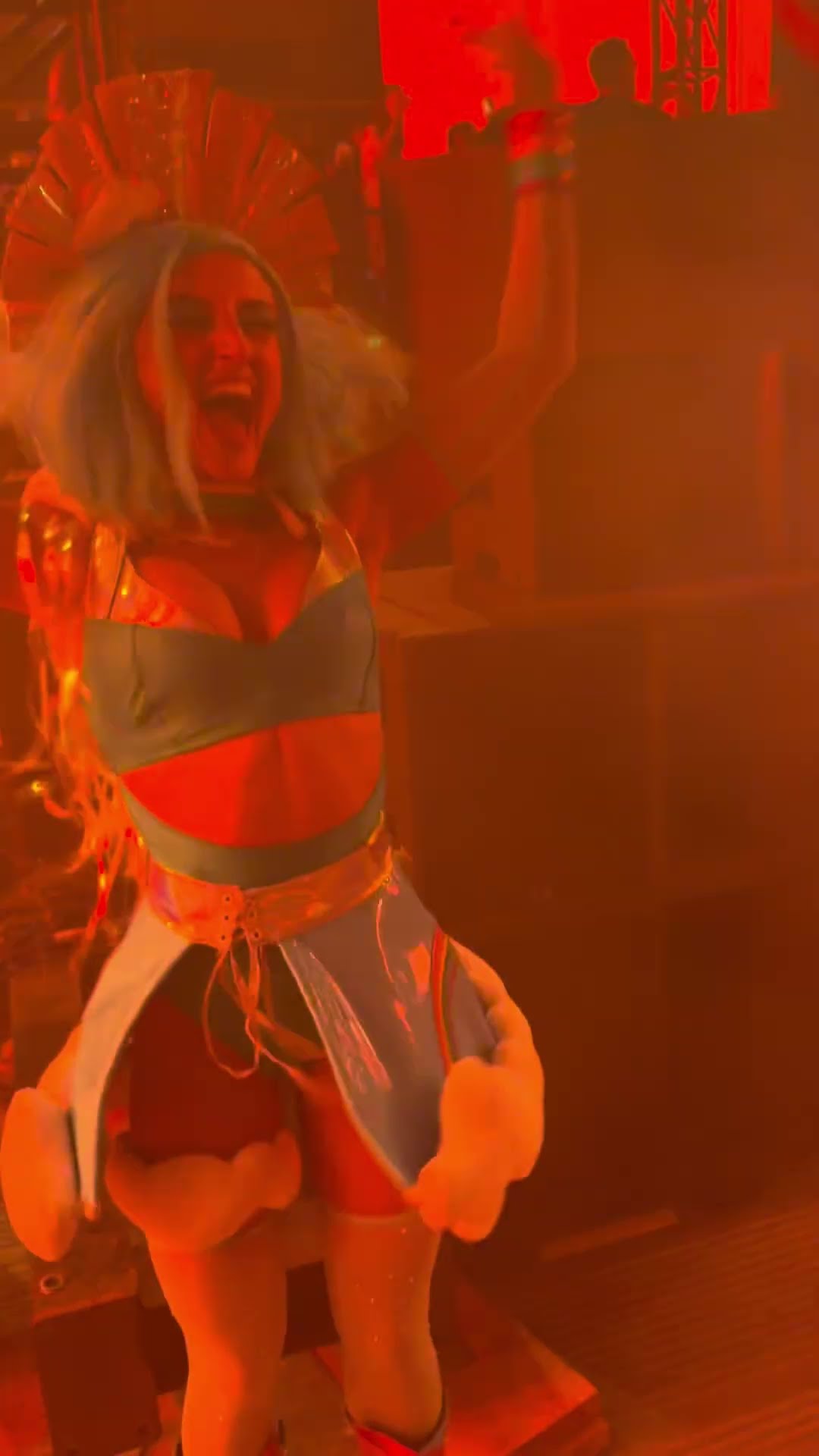
She saw the vibe and pointed right at us
Footage from Chris Lorenzo’s set at EDC Orlando on Friday, November 6, 2026. In the middle of the crowd, a dancer sees the camera, locks in, and points right at us. This is the clip, on YouTube.
Credit line: Electric Daisy Carnival was created in 1991 by Stephen Hauptfuhr and Gary Richards. Pasquale Rotella licensed the name in 1995, launched the Insomniac version in 1997, and, with Insomniac Events, built it into the global festival it is today.
Words by Messy Jordan. Urban House Music coverage from EDC Orlando, November 2026, reported on the ground at Tinker Field. This article is independent editorial coverage and is not published by, or on behalf of, Insomniac Events or EDC.